Last Updated on June 16, 2026 by Caesar
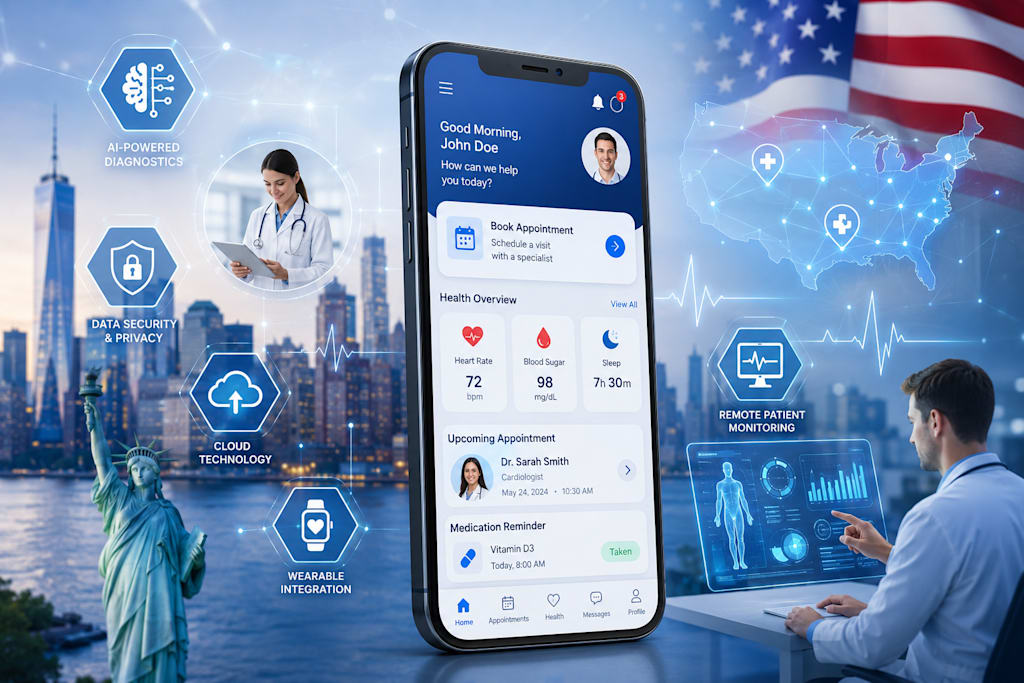
The healthcare industry in the United States is rapidly embracing artificial intelligence (AI) and machine learning (ML) to improve patient care, streamline operations, and enhance medical decision-making. As healthcare organizations continue to invest in digital transformation, AI-powered mobile applications are becoming essential tools for providers, patients, and healthcare businesses alike.
From predictive analytics and remote patient monitoring to virtual health assistants and personalized treatment recommendations, AI and ML are reshaping the future of healthcare app development. For businesses looking to build innovative healthcare solutions, partnering with an experienced healthcare app development company can help unlock the full potential of these advanced technologies.
In this article, we’ll explore how AI and machine learning are transforming healthcare mobile apps in the USA, the key benefits they offer, real-world use cases, and best practices for integrating intelligent features into modern healthcare applications. Whether you’re a healthcare provider, startup, or enterprise, understanding these technologies can help you create smarter, more efficient, and patient-centric digital health solutions.
Why AI and Machine Learning Are Essential for Healthcare Mobile Apps
The growing adoption of digital health solutions across the United States has made artificial intelligence (AI) and machine learning (ML) critical components of modern healthcare mobile applications. These technologies enable healthcare apps to process large volumes of patient data, identify patterns, and deliver actionable insights that improve both clinical outcomes and user experiences.
Today’s healthcare apps do much more than facilitate appointments or store medical records. By leveraging AI and ML, they support predictive analytics, automate tasks, enhance patient engagement, and help providers make data-driven decisions. As the industry evolves, intelligent solutions are driving innovation and efficiency, increasing demand for mobile app developers in San Francisco.
For healthcare organizations and businesses investing in digital health products, integrating AI capabilities can create a significant competitive advantage while meeting the increasing demand for personalized and accessible care.
Key Benefits of AI-Powered Healthcare Mobile Apps
Personalized Health Experiences
AI-powered healthcare apps can analyze patient behaviors, medical histories, and lifestyle data to provide customized recommendations. From medication reminders and wellness plans to preventive care suggestions, personalized experiences help users stay engaged and achieve better health outcomes.
Continuous Health Monitoring
Machine learning algorithms enable real-time monitoring through wearable devices and connected health platforms. These systems can track vital signs, identify abnormalities, and alert users or healthcare professionals when immediate attention may be required.
Improved Diagnostic Support
Healthcare applications equipped with AI can assist medical professionals by analyzing symptoms, medical images, and patient records more efficiently. This support helps accelerate diagnosis, reduce human error, and improve clinical decision-making.
Enhanced Operational Productivity
Healthcare providers can use AI-driven mobile solutions to automate administrative processes such as appointment scheduling, patient communication, billing assistance, and workflow management. This allows staff to focus more on patient care and less on repetitive tasks.
Reduced Healthcare Costs
By automating routine processes, minimizing manual errors, and enabling early detection of health conditions, AI-powered healthcare applications can help reduce operational expenses and overall healthcare costs for both providers and patients.
Better Patient Engagement
Intelligent healthcare apps can provide interactive features such as virtual health assistants, symptom checkers, and personalized health insights. These tools encourage users to take a more active role in managing their health and wellness.
Key Applications of AI and Machine Learning in Healthcare Mobile Apps
Artificial intelligence and machine learning are transforming healthcare mobile applications by enabling smarter, faster, and more personalized experiences for both patients and healthcare professionals. From virtual consultations to advanced diagnostics, AI-powered solutions are helping healthcare organizations improve efficiency and deliver better patient outcomes.
1. AI-Powered Virtual Assistants and Healthcare Chatbots
Healthcare apps increasingly use AI-driven chatbots and virtual assistants to provide instant support, answer common medical questions, schedule appointments, and guide users through healthcare services. These intelligent assistants help improve accessibility while reducing the workload on healthcare staff.
Example:
A mental wellness application can utilize an AI-powered assistant to provide users with personalized coping strategies, self-care recommendations, and immediate support resources based on their needs.
2. Predictive Analytics for Early Risk Detection
Machine learning algorithms can analyze patient records, lifestyle data, and health metrics to identify patterns associated with potential medical conditions. This enables healthcare providers and patients to take preventive action before health issues become more serious.
Example:
A preventive healthcare app may analyze activity levels, sleep patterns, and heart rate data to identify early indicators of chronic conditions such as diabetes, hypertension, or cardiovascular disease.
3. Intelligent Medical Imaging and Diagnostics
AI technologies are helping healthcare professionals interpret medical images more efficiently by identifying abnormalities and supporting diagnostic decisions. This improves accuracy and helps reduce the time required for evaluations.
Example:
A radiology-focused healthcare application can leverage AI models to assist physicians in detecting potential abnormalities in X-rays, CT scans, and MRI images, improving diagnostic confidence and efficiency.
4. Remote Patient Monitoring Solutions
AI combined with wearable technology and connected medical devices enables continuous patient monitoring outside traditional healthcare settings. These solutions provide real-time insights and alerts when unusual health patterns are detected.
Example:
A remote monitoring application connected to smart health devices can track blood pressure, heart rate, oxygen levels, and glucose readings while notifying healthcare providers when intervention may be necessary.
5. Accelerated Drug Research and Clinical Innovation
Healthcare organizations and research institutions are using AI to process large datasets, identify trends, and support drug discovery efforts. Mobile platforms can serve as valuable tools for collecting patient data and supporting clinical research initiatives.
Example:
AI-powered healthcare platforms can help researchers evaluate treatment effectiveness, identify suitable clinical trial candidates, and analyze large volumes of medical data more efficiently.
6. Personalized Wellness and Mental Health Support
Machine learning enables healthcare applications to deliver highly personalized wellness experiences based on user behavior, preferences, and health goals. These solutions can adapt recommendations over time to improve engagement and effectiveness.
Example:
A mental health application can analyze user interactions and wellness progress to recommend customized meditation sessions, stress-management techniques, and behavioral health exercises tailored to individual needs.
7. Smart Medication Management
Medication adherence remains a major challenge in healthcare. AI-powered applications can help users manage prescriptions through intelligent reminders, dosage tracking, and personalized notifications.
Example:
A medication management app can monitor adherence patterns and provide proactive reminders while alerting caregivers or healthcare providers when medications are consistently missed.
8. Personalized Treatment Recommendations
AI systems can analyze medical histories, symptoms, genetic information, and treatment outcomes to help healthcare providers develop more personalized care plans for patients.
Example:
A healthcare mobile application can generate data-driven treatment recommendations that help physicians select therapies best suited to an individual patient’s health profile.
Challenges of Integrating AI into Healthcare Mobile Apps
Although artificial intelligence and machine learning offer significant advantages for healthcare mobile applications, implementing these technologies comes with several challenges. Healthcare organizations and development teams must address these obstacles to ensure secure, reliable, and compliant digital health solutions.
1. Data Privacy, Security, and Regulatory Compliance
Healthcare applications manage highly sensitive patient information, making data security one of the most critical concerns during development. Organizations must comply with healthcare regulations such as HIPAA in the United States and other applicable data protection standards to ensure patient confidentiality and trust.
To protect healthcare data, developers should implement advanced security measures, including end-to-end encryption, secure cloud storage, multi-factor authentication, role-based access controls, and regular security audits.
2. Complex Development and Implementation Costs
Developing AI-powered healthcare applications often requires significant investment in technology infrastructure, specialized development expertise, data management systems, and ongoing model training. Additionally, healthcare solutions frequently require integration with electronic health records (EHRs), wearable devices, and third-party healthcare platforms.
Working with an experienced healthcare app development company in the USA can help organizations streamline development processes, reduce implementation risks, and maximize long-term return on investment.
3. Data Quality and Algorithm Accuracy
The effectiveness of AI systems depends heavily on the quality of the data used to train machine learning models. Inaccurate, incomplete, or biased datasets can negatively impact predictions, recommendations, and diagnostic support capabilities.
To maintain high levels of accuracy, development teams must continuously validate AI models, utilize diverse datasets, perform extensive testing, and regularly update algorithms as new healthcare data becomes available.
4. Building Patient and Provider Trust
Many healthcare users remain cautious about relying on artificial intelligence for medical-related decisions. Concerns around transparency, reliability, and data usage can affect user adoption rates if not properly addressed.
Healthcare applications should clearly explain how AI-generated recommendations are produced, how personal data is collected and protected, and where human medical oversight remains involved. Transparent communication helps establish credibility and encourages greater trust among patients and healthcare professionals.
5. Integration with Existing Healthcare Systems
Many healthcare organizations rely on legacy systems, electronic health records, and third-party platforms that may not be designed to support modern AI technologies. Ensuring seamless integration can be technically challenging and time-consuming.
Successful AI implementation requires scalable architecture, interoperability standards, and careful planning to ensure smooth data exchange across healthcare ecosystems.
6. Continuous Maintenance and Model Updates
Unlike traditional software features, AI models require ongoing monitoring and optimization to maintain performance. Healthcare data evolves over time, and machine learning algorithms must be retrained regularly to ensure they continue delivering accurate insights and recommendations.
Organizations should plan for long-term maintenance, performance monitoring, and periodic updates as part of their AI healthcare app strategy.
7. Ethical Considerations and Responsible AI Usage
Healthcare decisions can directly impact patient well-being, making ethical AI implementation essential. Developers must ensure that AI systems operate fairly, minimize bias, and support clinical decision-making without replacing professional medical judgment.
Establishing clear governance policies and maintaining human oversight can help healthcare organizations deploy AI responsibly while maintaining patient safety and regulatory compliance.
How to Successfully Integrate AI and Machine Learning into Healthcare Mobile Apps
Implementing artificial intelligence and machine learning in healthcare applications requires a strategic approach that balances innovation, security, compliance, and user experience. Whether you’re developing a patient-facing solution or a healthcare management platform, following a structured development process can help ensure long-term success.
Step 1: Identify Your Healthcare Objectives
Before selecting technologies or building features, clearly define the purpose of your healthcare application. Determine the specific challenges you want to address and how AI can enhance the user experience or improve healthcare outcomes.
Common objectives may include:
- Remote patient monitoring
- Symptom assessment and triage
- Personalized treatment recommendations
- Medical image analysis
- Medication management
- Virtual healthcare assistance
A well-defined roadmap helps ensure that AI features align with business goals and user needs.
Step 2: Select the Right AI and Machine Learning Technologies
Choosing the appropriate technology stack is critical for building scalable and efficient healthcare solutions. Development teams should evaluate machine learning frameworks, cloud infrastructure, and data processing tools based on project requirements.
Popular technologies include:
- TensorFlow for machine learning model development
- PyTorch for advanced AI applications
- Google Cloud AI services
- Amazon Web Services (AWS) AI and Machine Learning solutions
- Microsoft Azure AI services
The right technology foundation supports future scalability and continuous innovation.
Step 3: Build a Secure and Compliant Data Infrastructure
Healthcare applications rely heavily on sensitive patient information. Establishing a secure data architecture is essential to protect user privacy and comply with healthcare regulations.
Best practices include:
- End-to-end data encryption
- Secure cloud storage
- Multi-factor authentication
- Role-based access controls
- Regulatory compliance with HIPAA and other applicable standards
Strong security measures help build trust among users and healthcare organizations.
Step 4: Develop, Train, and Validate AI Models
The performance of AI-powered healthcare applications depends on the quality of their machine learning models. Development teams should use reliable healthcare datasets and conduct extensive testing before deployment.
Focus on:
- Data accuracy and quality
- Model training and optimization
- Bias detection and mitigation
- Performance benchmarking
- Continuous validation and monitoring
Rigorous testing ensures that AI-generated insights remain reliable and clinically relevant.
Step 5: Create a User-Centered Experience
Even the most advanced AI solution will struggle to gain adoption if the user experience is poor. Healthcare applications should make AI-powered features intuitive, transparent, and easy to understand.
Consider:
- Clear explanations of AI-generated recommendations
- Simple navigation and accessibility
- Personalized dashboards
- Real-time notifications and alerts
- Seamless integration with wearable devices and healthcare systems
User-friendly design encourages engagement and improves overall satisfaction.
Step 6: Monitor Performance and Gather User Feedback
AI implementation does not end at launch. Continuous monitoring and user feedback are essential for improving model performance, identifying issues, and enhancing functionality over time.
Organizations should:
- Track user engagement metrics
- Analyze AI prediction accuracy
- Monitor system performance
- Collect patient and provider feedback
- Release regular updates and improvements
Ongoing optimization helps healthcare applications remain effective and competitive in a rapidly evolving market.
The Future of AI-Powered Healthcare Mobile Apps
Artificial intelligence and machine learning are reshaping healthcare delivery across the United States, enabling organizations to provide smarter, faster, and more personalized care. From predictive analytics and virtual health assistants to remote patient monitoring and intelligent diagnostics, AI-driven applications are transforming how patients and providers interact with healthcare services.
As healthcare technology continues to advance, organizations that invest in AI-powered mobile solutions will be better positioned to improve patient outcomes, streamline operations, and stay ahead of industry trends. Businesses looking to develop innovative healthcare applications should focus on building secure, scalable, and user-centric solutions that leverage the full potential of artificial intelligence.
If you’re planning to develop an AI-powered healthcare solution, partnering with an experienced healthcare app development company can help turn your vision into a high-performing application that delivers measurable value for both patients and healthcare providers.